Basketball is more than just a game in the school ecosystem; it is a laboratory for character building, physical fitness, and teamwork. Whether you are a student-athlete looking to make the varsity team or a coach designing a seasonal program, having a structured training guide is essential for success.
This comprehensive guide breaks down the core pillars of school-level basketball training, focusing on skill development, physical conditioning, and the mental game.
1. Mastering the Fundamentals: The Foundation of Every Player
Before diving into complex plays, school players must master the “Big Three” of basketball fundamentals: dribbling, shooting, and passing.
- Ball Handling: Drills should focus on “eyes-up” dribbling. Use stationary drills like crossovers, between-the-legs, and behind-the-back movements to build muscle memory.
- Shooting Mechanics: Follow the B.E.E.F. principle:
- Balance: Feet shoulder-width apart.
- Eyes: Target the back of the rim.
- Elbow: Tucked in, forming a “L” shape.
- Follow-through: Reach into the cookie jar.
- Precision Passing: Training must include chest passes, bounce passes, and overhead passes. The key is accuracy and “snapping” the ball to ensure it isn’t intercepted.
2. Defensive Drills: The Key to Winning Championships
As the old saying goes, “Offense sells tickets, but defense wins championships.” In school basketball, a disciplined defense can often overcome a more athletic opponent.
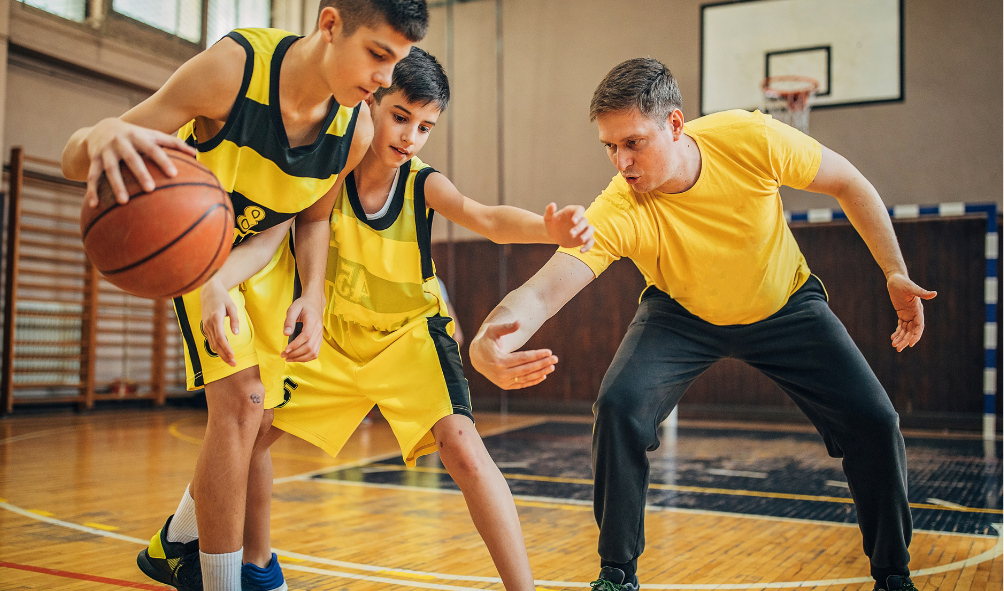
- Defensive Stance: Players should practice staying low with their weight on the balls of their feet, arms wide, and chest up.
- Lateral Quickness: Use “lane slides” to improve foot speed. Players must move side-to-side without crossing their feet.
- Boxing Out: Teaching students how to use their bodies to secure a rebound is a vital skill that levels the playing field against taller teams.
3. Strength and Conditioning for Student-Athletes
School basketball is fast-paced. Without proper conditioning, performance drops significantly in the fourth quarter. A well-rounded program includes:
- Aerobic Capacity: Full-court “suicides” or “17s” (running the width of the court 17 times) build the endurance needed for high-intensity games.
- Plyometrics: Box jumps and lateral hops help increase a player’s vertical leap and explosive power.
- Core Strength: A strong core improves balance during jump shots and prevents injuries when taking contact in the paint.
4. The Mental Game and Basketball IQ
Understanding how to play is just as important as the physical ability to play. Coaches should dedicate time to “chalk talk” and film study.
- Spacing and Movement: Teach players the importance of floor spacing. Standing still makes the defense’s job easy; constant off-ball movement creates scoring opportunities.
- Situational Awareness: Practice “end-of-game” scenarios. What do you do when you are down by two points with ten seconds left? Training for these moments reduces panic during real games.
- Academic Balance: Being a “student-athlete” means the “student” comes first. Proper training includes time management skills to ensure grades remain high enough for eligibility.
5. Sample Weekly Training Schedule
For a balanced approach, follow this structure:
| Day | Focus Area | Key Activity |
| Monday | Skills & Shooting | Form shooting, free throws, and layups. |
| Tuesday | Conditioning | Sprint intervals and plyometric circuits. |
| Wednesday | Team Tactics | Offensive sets, pick-and-roll, and zone defense. |
| Thursday | Strength | Bodyweight exercises or light weightlifting. |
| Friday | Scrimmage | Full-court 5-on-5 to apply learned skills. |
Final Thoughts: Consistency is King
The difference between a good player and a great player in school basketball is consistency. Showing up to the gym when no one is watching, practicing free throws until they become automatic, and maintaining a positive attitude are the hallmarks of a champion.
By following this guide, student-athletes can develop a holistic skill set that prepares them not only for the next game but for the discipline required in life beyond the hardwood.
